the nbc chimes are mechanized
One of the drawbacks of any hand–operated signaling system is that they are operated by humans. Humans are erratic and are prone to errors. Even with the chime signal down to three tones, there were significant variations in volume, speed, and other variables encountered in striking the Deagan dinner chimes. Indeed, surviving recordings of hand–struck three–tone chimes often seem to have a tone missing, due to it being struck too softly to be picked up by the microphone.
NBC Engineers Oscar B. Hanson and Robert Morris paid a visit to Captain Richard Ranger of North Newark, New Jersey, to inspect Ranger’s pioneering work in the field of electronic organs. At dinner later that evening, Hanson and Morris outlined a proposal to Captain Ranger to build an electronic version of the NBC chimes, explaining that a steady, reliable, consistant signal would be an improvement over the present arrangment of striking the chime tones by hand.
Captain Ranger returned some six weeks later with a rack–mounted device containing three rotating wheels with studs attached, which plucked three sets of eight tuned metal reeds each. A large–scale electronic music box, this machine met with instantaneous approval. Its tonal quality apparently left something to be desired, so Musical Director Ernest La Prade worked with NBC engineer Roland Lynn to modify the output slightly. Once this was done and the results approved, the Rangertone chimes went into service in New York, and orders were placed to install them in the other NBC program origin points of Chicago, Cleveland, Washington, and San Francisco. (NBC had small studios in Hollywood starting in 1932, but these had no network switching facilities. Instead, programming originating in Hollywood bypassed the entire West Coast complex, and was sent directly to Chicago to be distributed to the rest of the network. A complete studio / programming / network switching complex was built in Hollywood in 1937, and with it came an installation of Rangertone chimes.)
The date given by Robert Morris in his own account is “sometime during the latter part of 1933” but this is surely incorrect. The undated First Use of the Famous NBC Chimes paper states that the electronic chimes were inaugurated at 10:00am on September 17, 1932, while a small item in the October 1, 1932 issue of Broadcasting states that “Manual labor again bowed to machinery when an automatic electrical device on Sept. 18 replaced the familiar hand–struck chimes in the NBC New York Studios”. Whenever the start date, the Rangertone chimes are quite clearly heard on Ed Wynn’s Texaco Fire Chief program from October 18, 1932. Mention of the new chimes machine, said to be in a trial period, is made in the following item taken from the October 1, 1932 issue of Radio World:
NBC ELECTRIC CHIMES GIVEN AUDIENCE TRIAL
The National Broadcasting Company chimes, which for years have kept the networks in synchronous step, have changed their tone.
An automatic electrical device, sending out a modulated, even tone at a constant level, replaced the familiar hand–struck chimes on all programs emanating from the NBC New York studios.
Purpose of Chimes
The contrivance, invented by Captain Richard H. Ranger, designer of the pipeless organ and the bell–less carillon, has been installed in the main control room of the NBC Building in New York. If the trial period proves its operation practical and its precise notes pleasing to the public, it will be adopted as permanent equipment at the New York Studios and also installed in the main control rooms of NBC Studios in all other cities.
The purpose of the chimes, which previously have been rung by the announcer striking one of the small hand sets with which each studio is equipped, is to synchronize local station identification announcements, and to serve as a cue to engineers at relay points all over the country to switch various branches of the networks on or off as the programs change each fifteen minutes.
Automatic Adjustment
For some time technicians have been seeking some automatic instrument which would insure a more constant level than could be obtained when different announcers were required to produce the three notes on different instruments.
The device itself is based on the old–fashioned music box. Actually, there are no chimes, only electrically created tones. A revolving drum with properly spaced pins, striking against a series of metal reeds, tuned to the chime pitch, produces electric vibrations which are picked up and amplified.
An even earlier news story about the NBC chimes machine was syndicated by the Associated Press in mid to late July, 1932. As printed in The Binghamton, NY Press on July 22, 1932, it read:
Radio Device Will Put End to ‘Sour’ Note
Chimes Hereafter to Be Operated by Electricity, NBC Announces
The day of the announcer–operated chimes is over at the NBC studios. Hereafter an electrical device will do the job.
At the same time there will be eliminated the “sour” notes that often materialized when the announcer failed to hit the three–note xylophone used to produce the chimes in the proper sequence or with the right force.
The new device is a development of Captain R. H. Ranger, radio engineer, noted for his work on the electric organ and in facsimile radio transmission.
All the announcer need do is press a small button. That not only “rings” the chimes but cuts them into the proper network.
That the idea of mechanizing the chimes so soon after their reduction to only three notes may be indicated by another Associated Press release from January 1932, in which “the tinkling tones coming from a small three–note xylophone” are said to have caused such unfavorable comment that their use had been temporarily suspended to see what the public reaction would be.
internal chimes machine discussions
In an internal memo dated December 26, 1934, O. B. Hanson related to John F. Royal of the Programming Department that there were fewer complaints with the electronic chimes than they had with the old hand–struck variety. Hanson explained in the memo that the chimes “are used as a signal of constant amplitude to attract the attention of the personnel at the telephone company’s repeater points”. He then states “In order to make these chimes as unobtrusive as possible we have from time to time lowered the output level and recently it has been lowered to a point where we receive complaints from the telephone company and the network stations that they are not loud enough to attract attention, the purpose for which they were originally installed”. Other means of attracting attention had not been acceptable, Hanson noted, as it was felt that the chimes “represent the trade mark of the NBC on the air”.
An Engineering memo sent from George McElrath on September 3, 1935 urged engineers to have their maintenance supervisors install a four microfarad condenser across the output of the chimes machines. The condenser would lower the level output by 4 to 6 decibels and remove harsh overtones, resulting in a more pleasing tone to the ear. McElrath mentioned that the New York chimes had such a condenser in place, and its level had been adjusted “so that the maximum peak kicks twenty degrees on the volume indicator”. This is just above the point of audibility, and fits in with O. B. Hanson’s assertion that the chimes were intended to be just loud enough to attract the attention of telephone engineers.
what did the chimes machine look like?
T hanks to the generosity of historians and collectors with ties to NBC Radio and Television, The NBC Chimes Museum can now offer an intimate look at the Rangertone NBC Chimes Machines, including technical drawings from the 1950s, and pictures and recordings of one of the few Chimes Machines to survive to the present day.
engineering drawings of the rangertone chimes machine
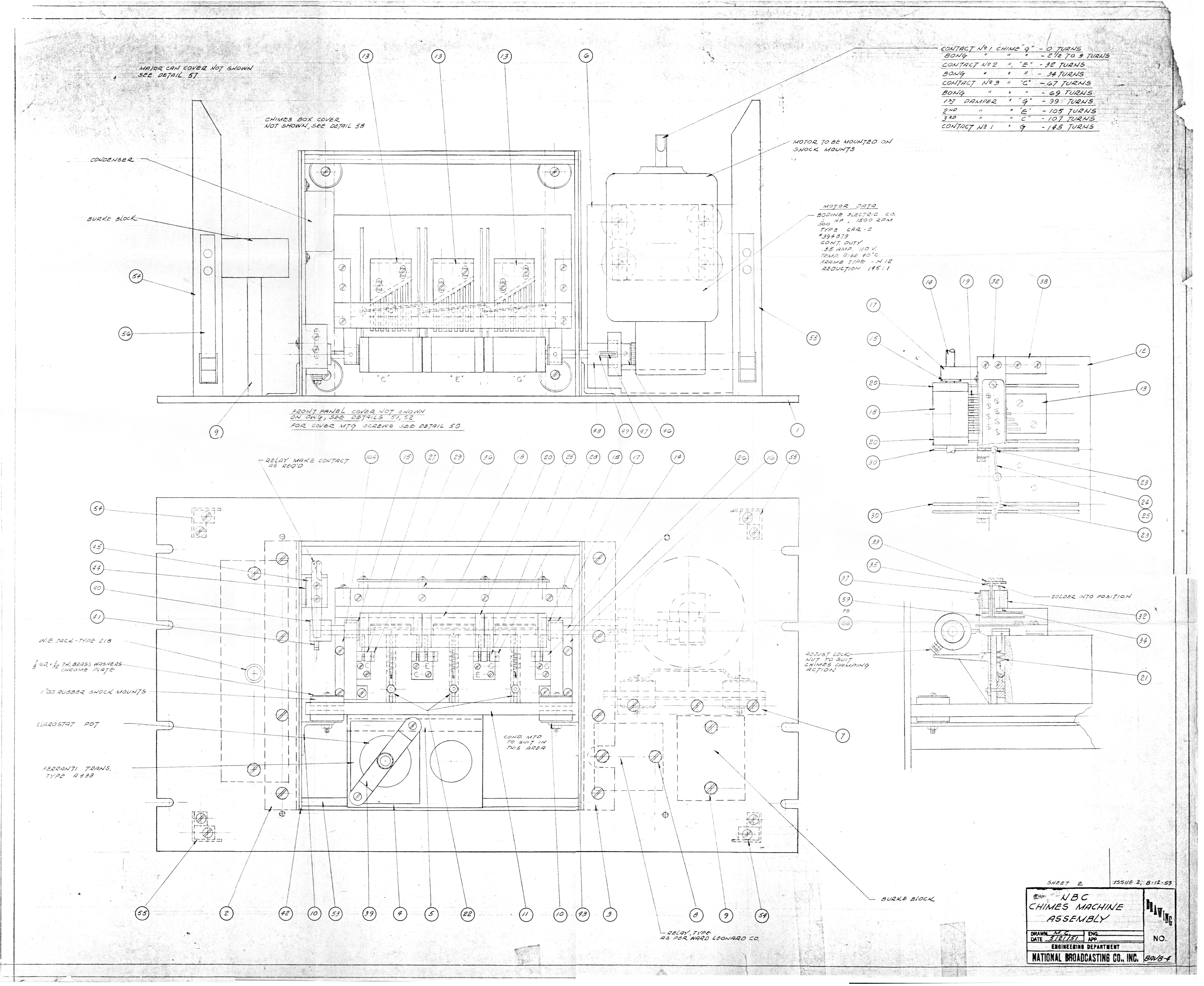
Brian Wickham provided scans of engineering drawings of the Chimes Machine; the upper image is a drawing of the entire machine, and it references detail drawings that most likely were lost over time. One interesting specification is found in the upper right, which prescribes the sequence of action (contact, note sounding, and note damping) relative to the precise number of turns of the motor shaft. The specifications for the motor are also given, right down to the manufacturer.
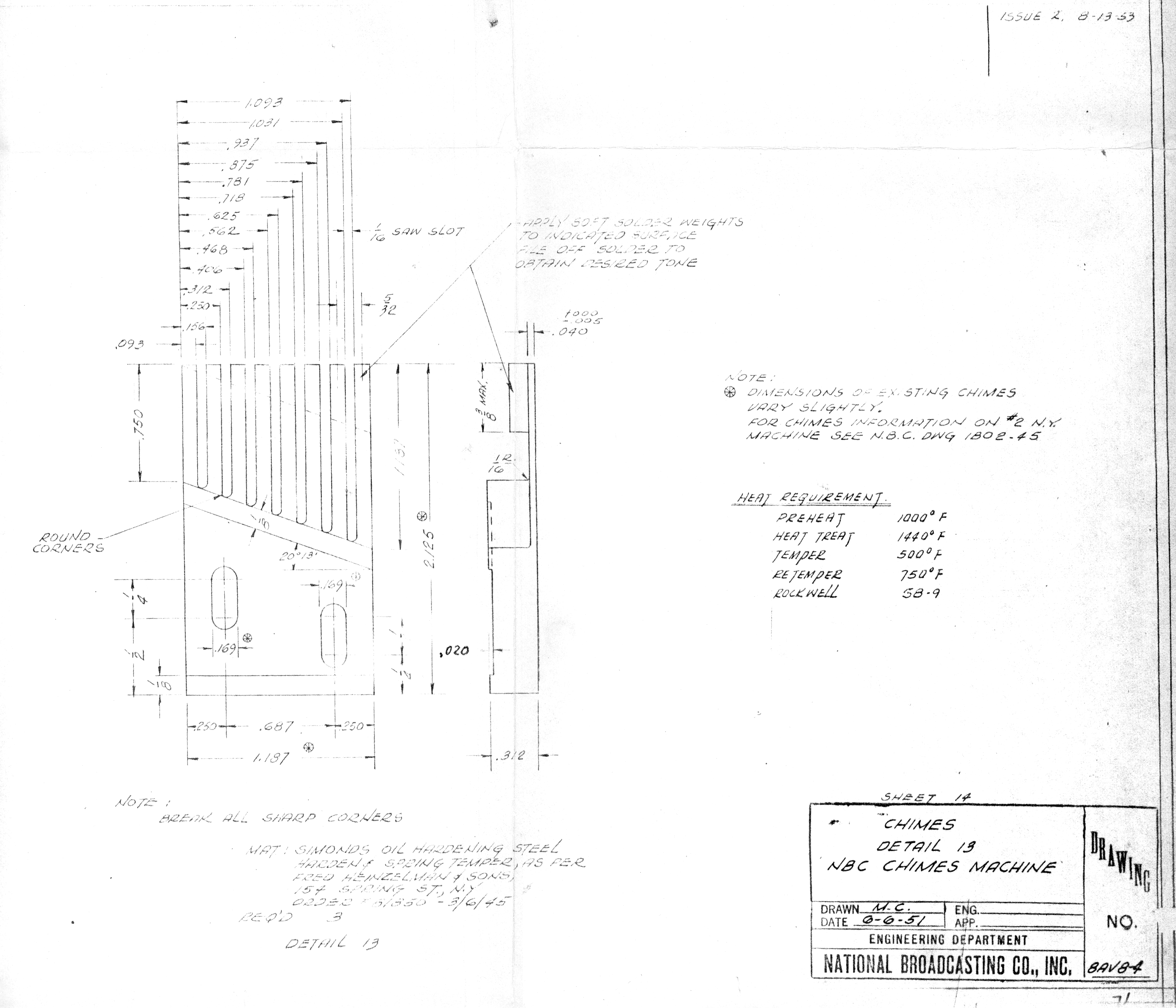
The lower image is a detail of the metal tines (or “reeds”, as they were called by NBC engineers) that actually gave off the chime sounds. This detail, number 13, is referenced for each of the three tines in the master engineering drawing. The three tines were identical in dimension and thickness; without other data available it would seem that the notes themselves were tuned elsewhere in the circuit. This detail includes the source of the spring steel and its tempering specifications, as well as the how the inner and outer cuts of the tines were to be made, and other information.
Click on either image to see a full–resolution version. The detail of the tines is 1.2mb; the full machine overview is 6mb. Mr. Wickham scanned the drawings in sections and then carefully assembled them in an imaging program to reconstruct the original appearance digitally.
the california historical radio society
san francisco rangertone chimes machine
In 2018, the California Historical Radio Society acquired Rangertone Chimes Machine Serial No 2, which had originally been installed in the NBC studios in San Francisco. The Society restored it, and published an examination of the mechanics of the machine and how everything functioned. You can read the entire article here.
an inside inspection of a rangertone chimes machine from new york
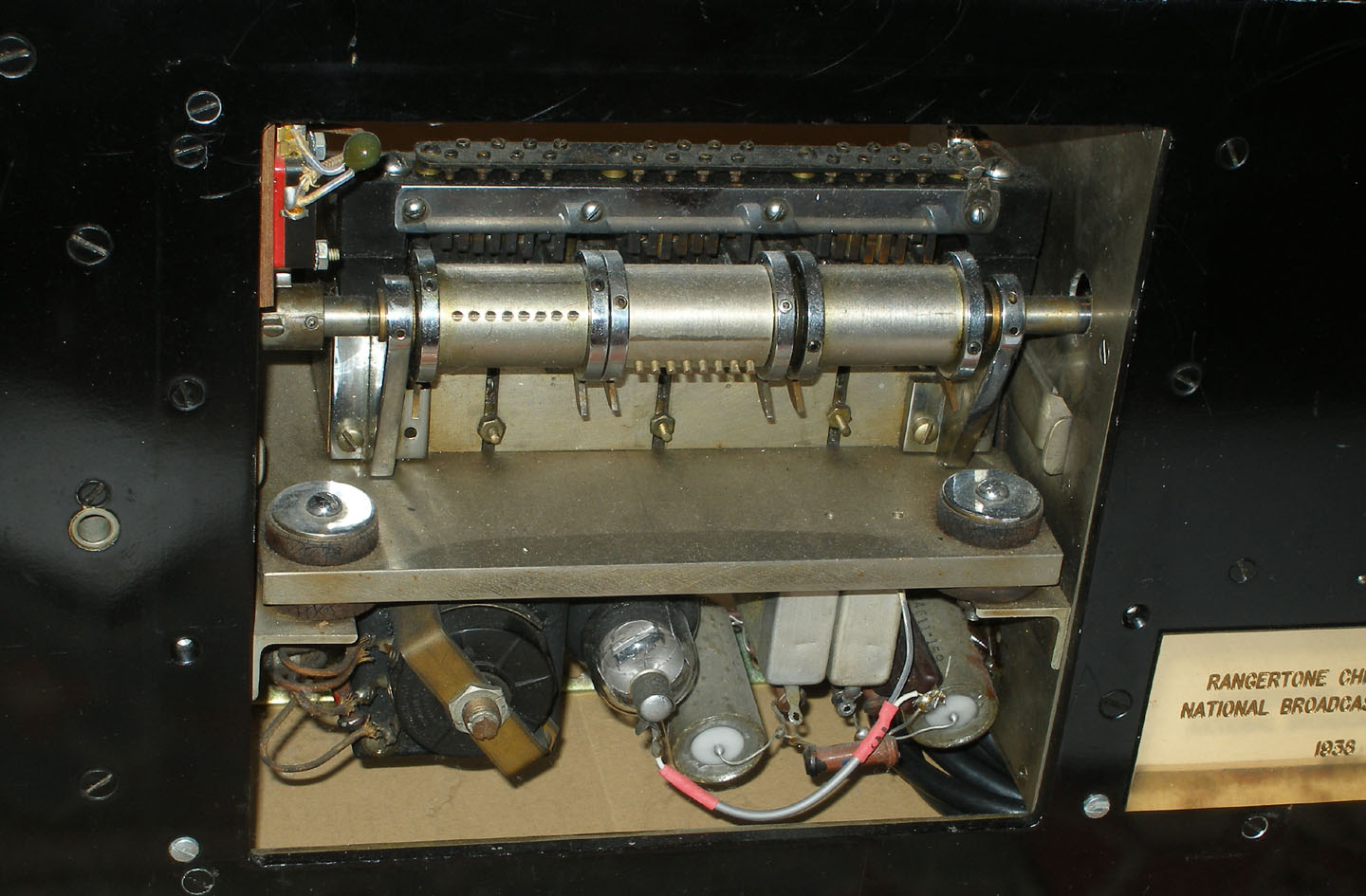
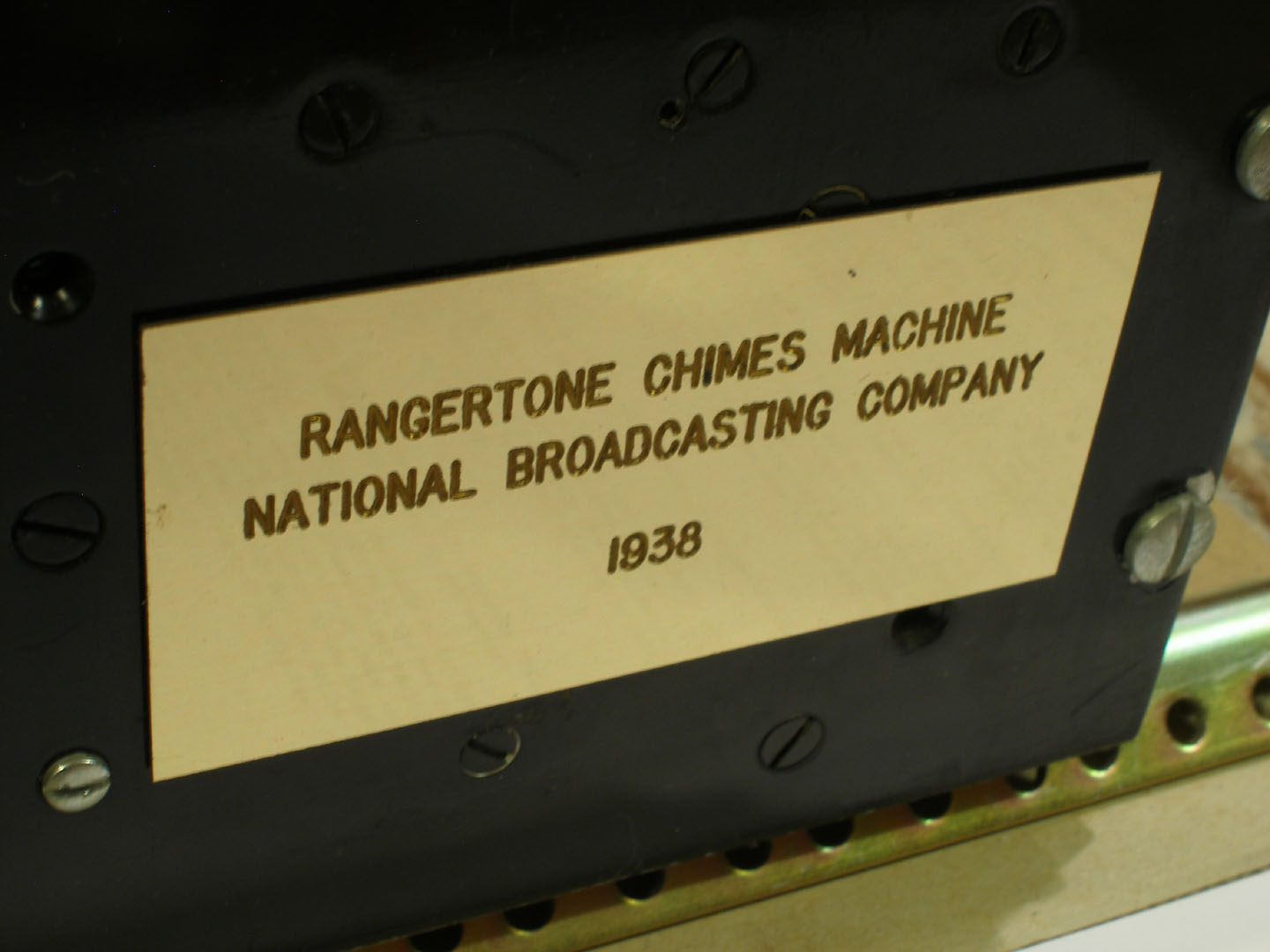
What you see here are details of a Rangertone Chimes Machine, circa 1938, in the possession of Mark Aceto, who took these pictures and has allowed this site to share them with you.
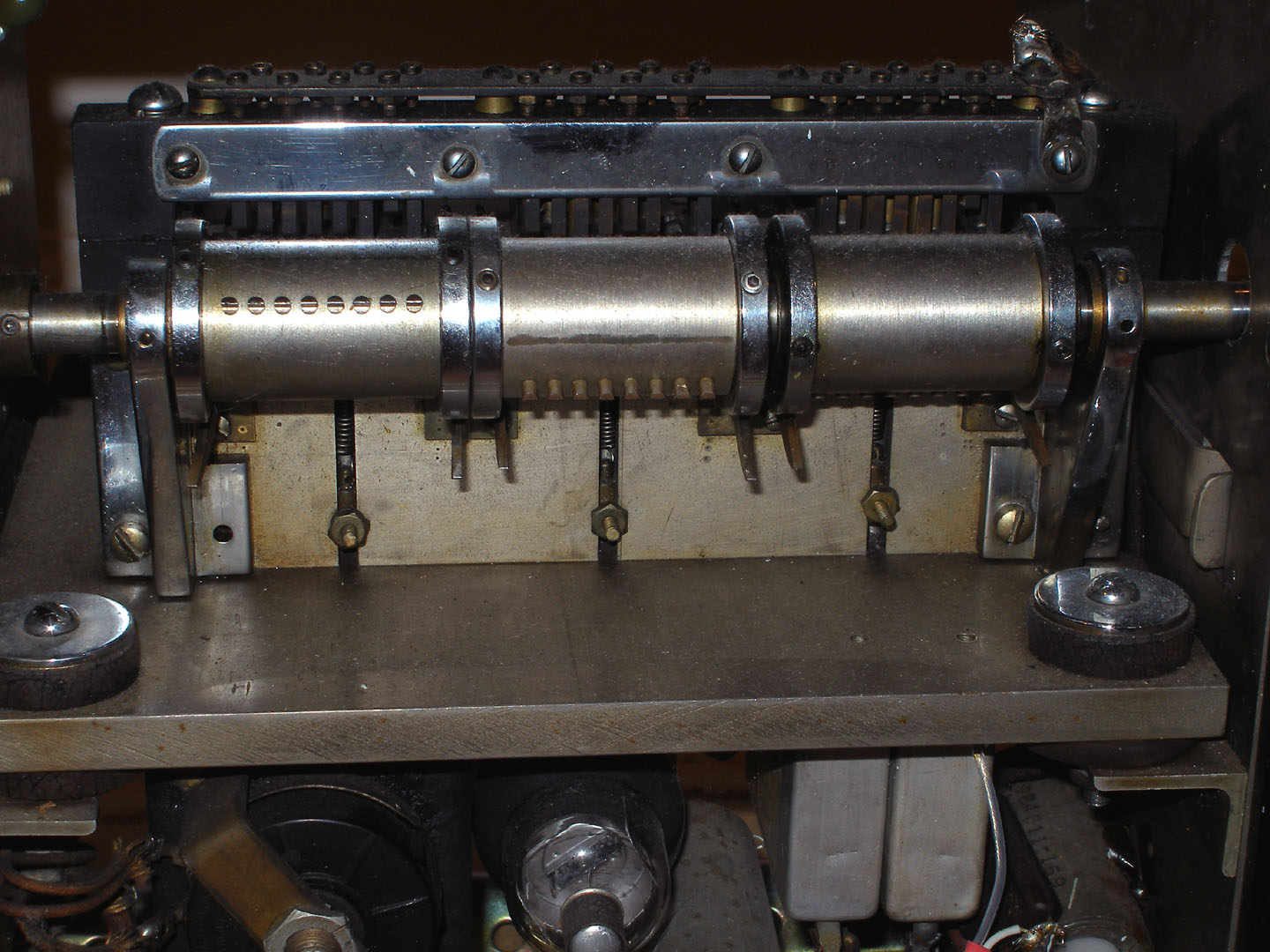
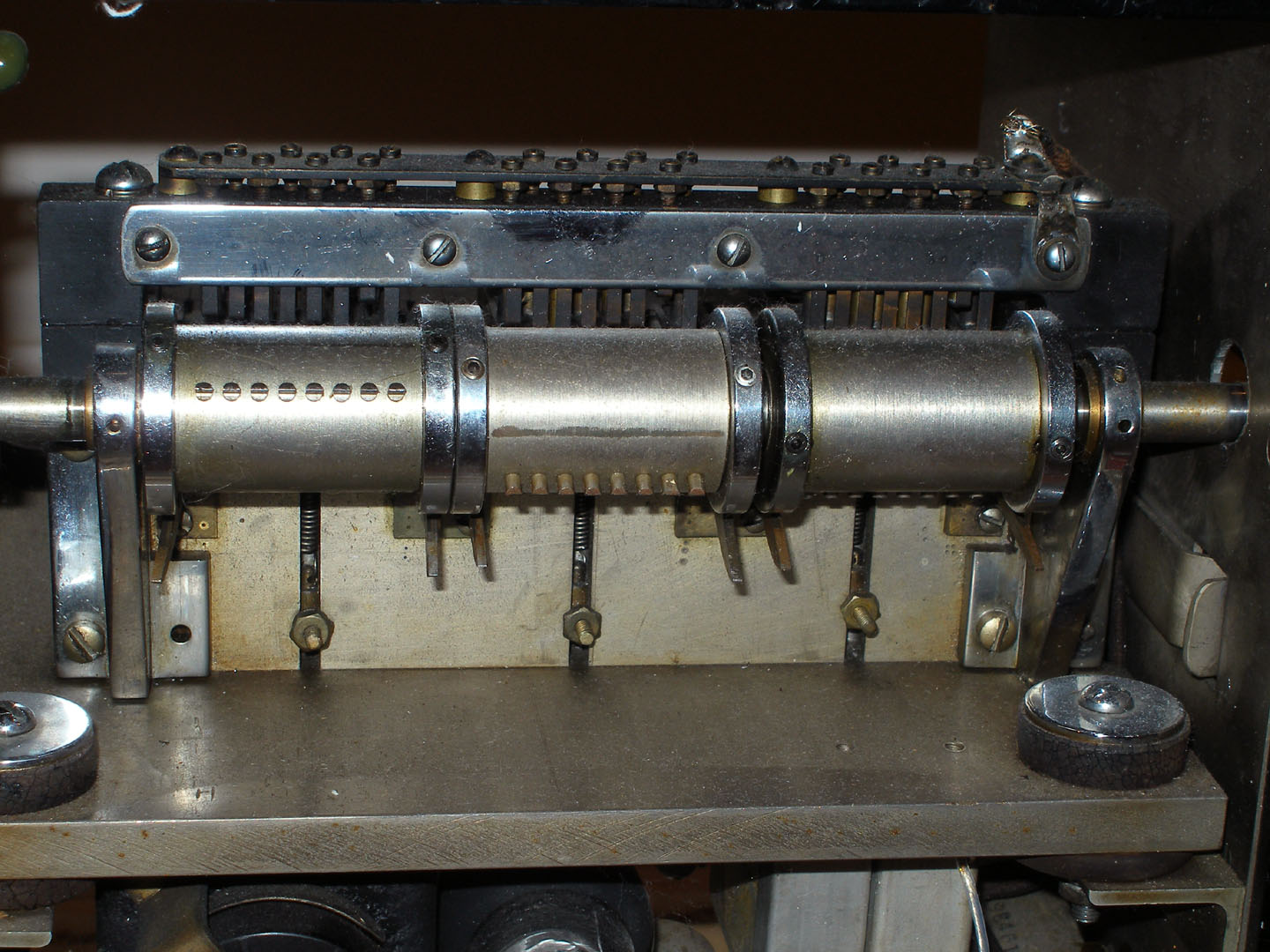
You can see several views of the front of the machine, minus the cover, including a display plaque.
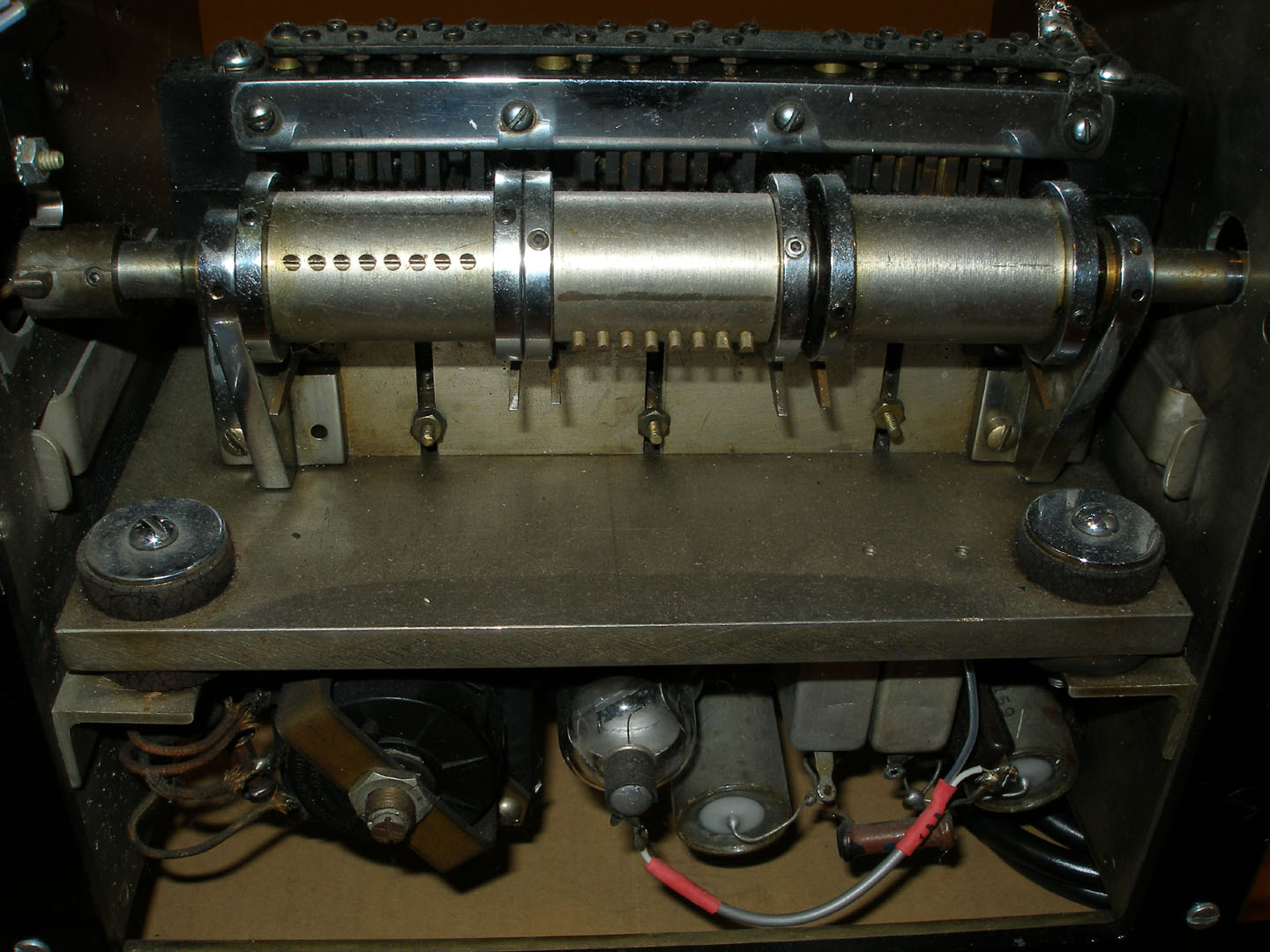
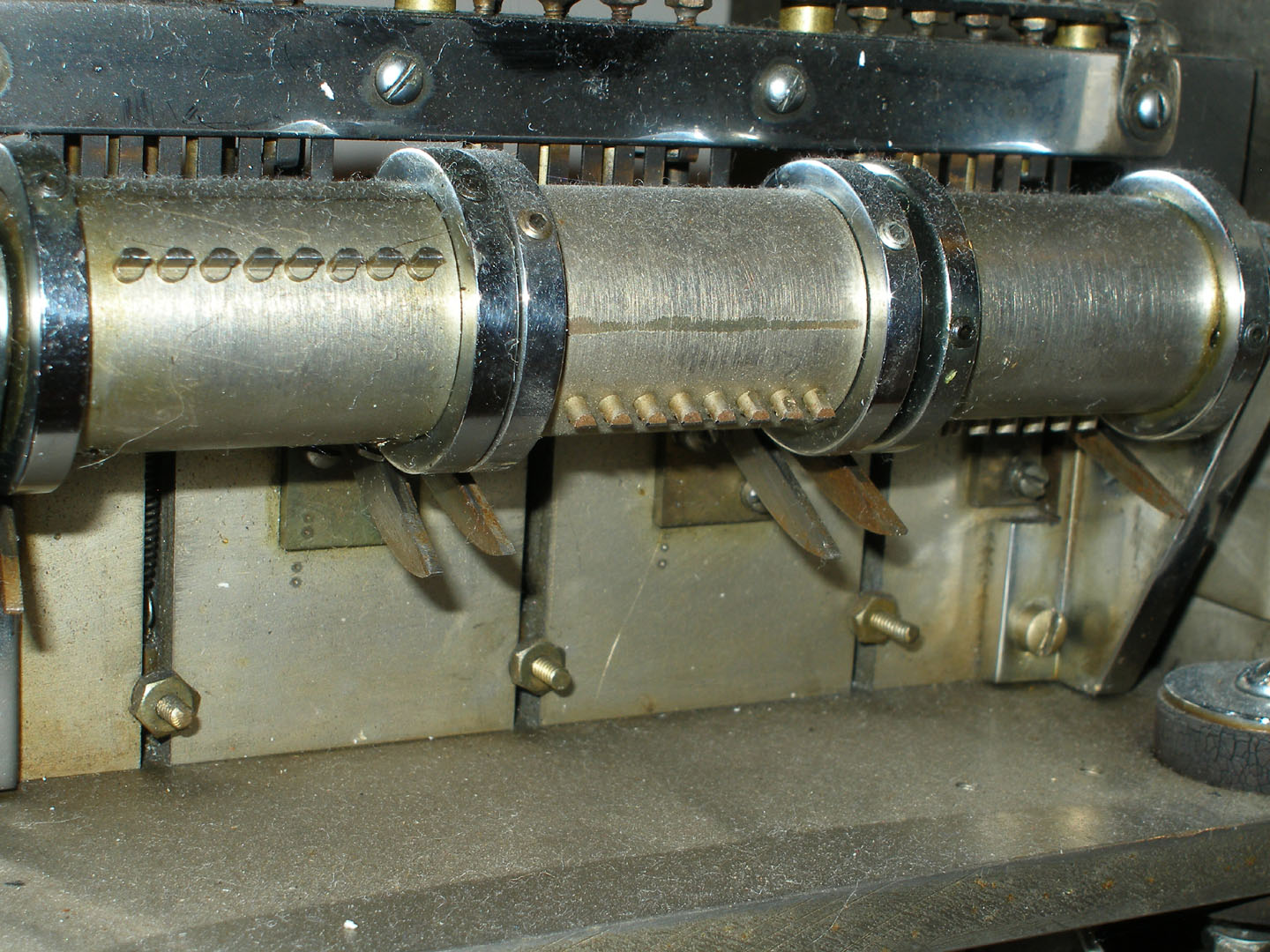
The chime reeds themselves seem to be behind the drum, and thus for the most part obscured from view.
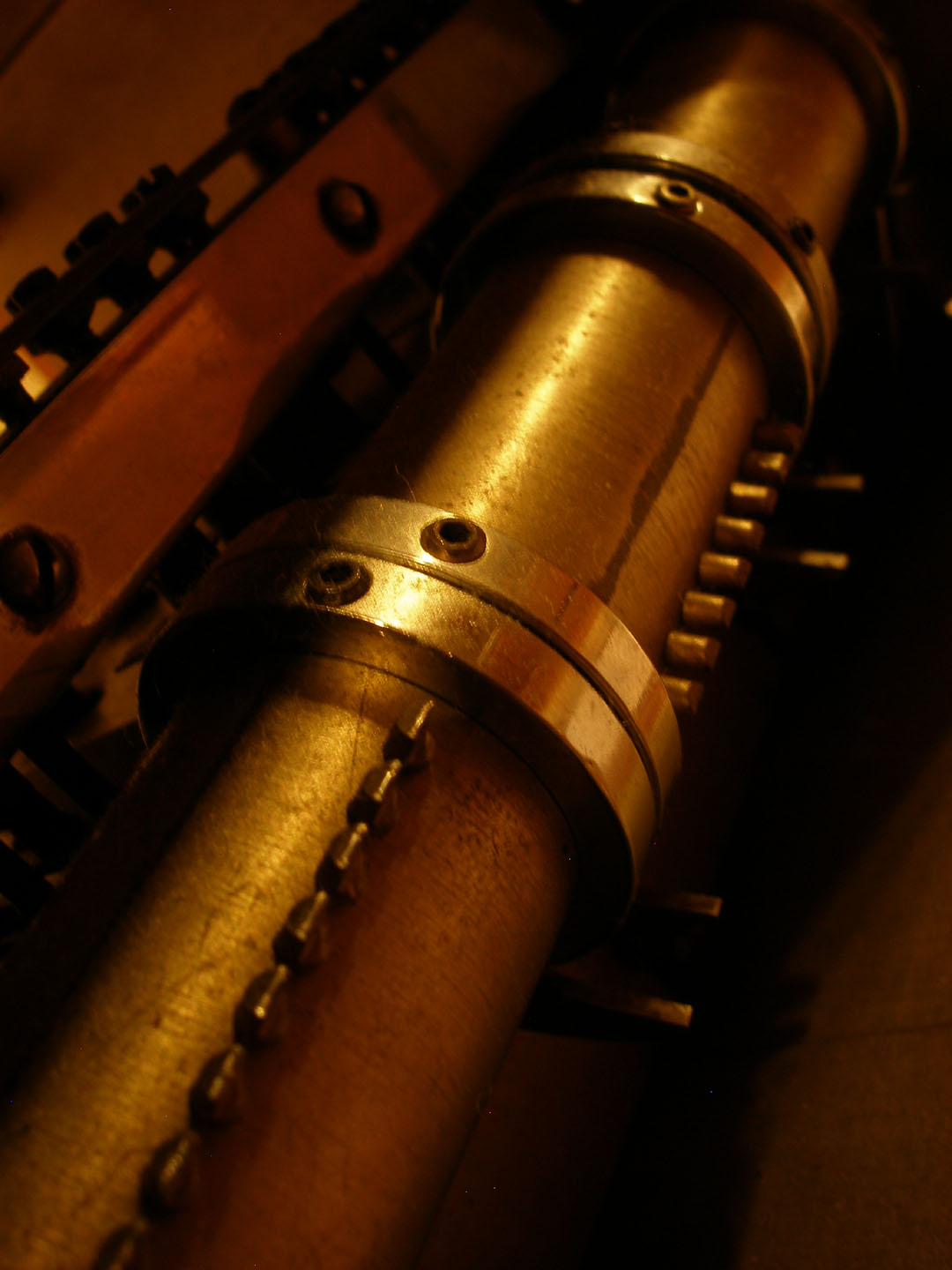
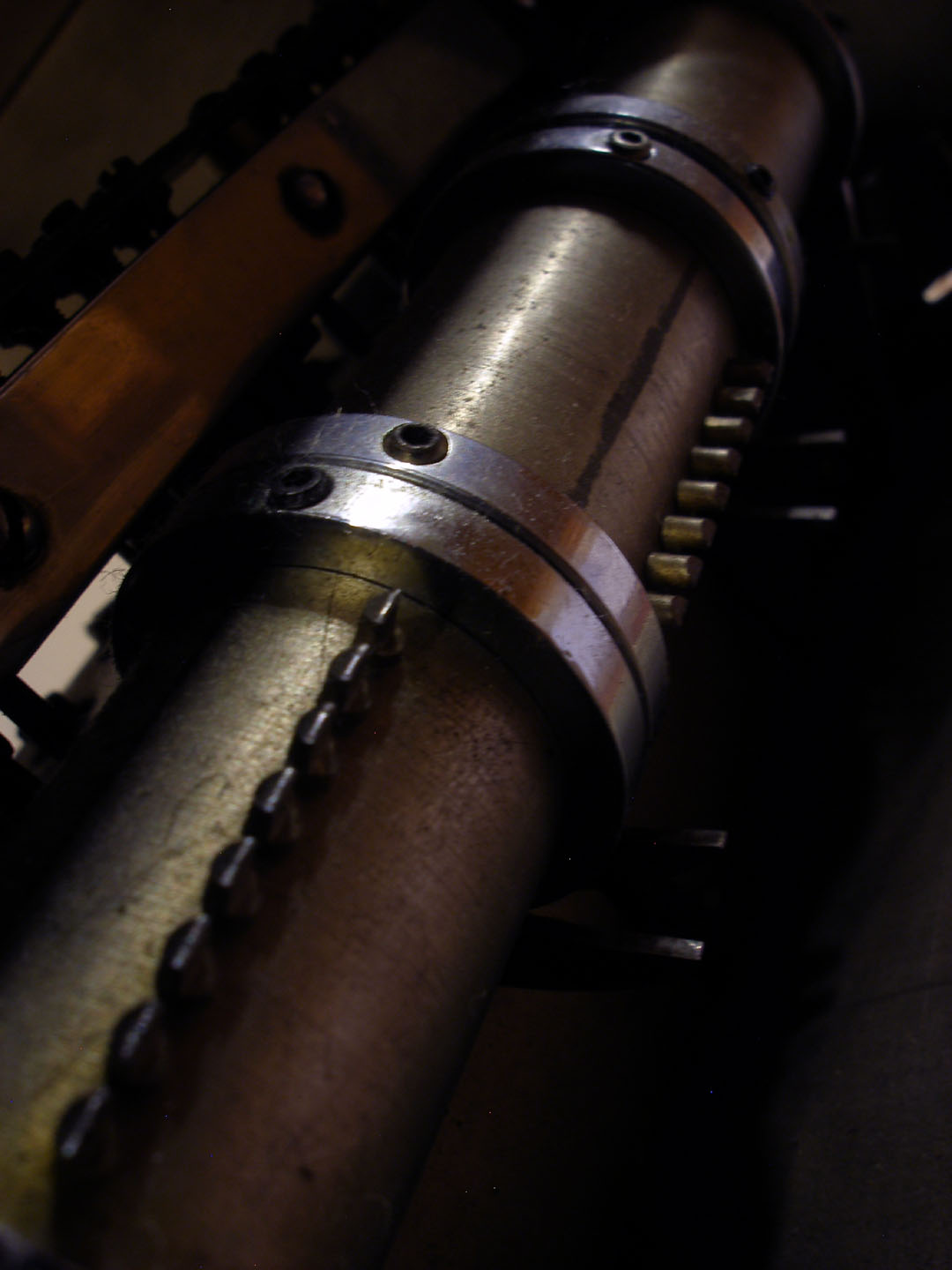
There are also closeups of the rotating drum from several angles, as well as the controller, motor, and wiring blocks.
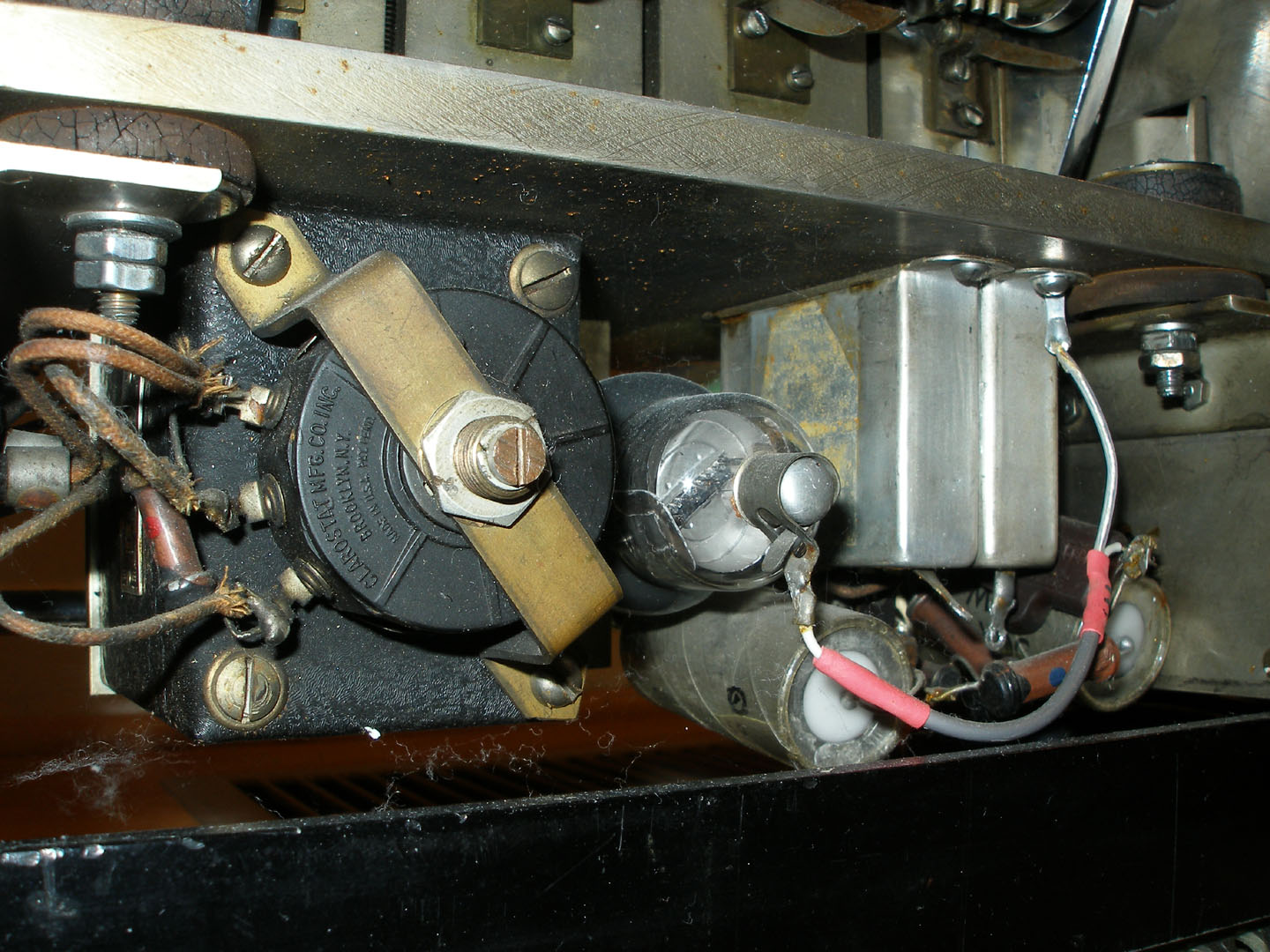
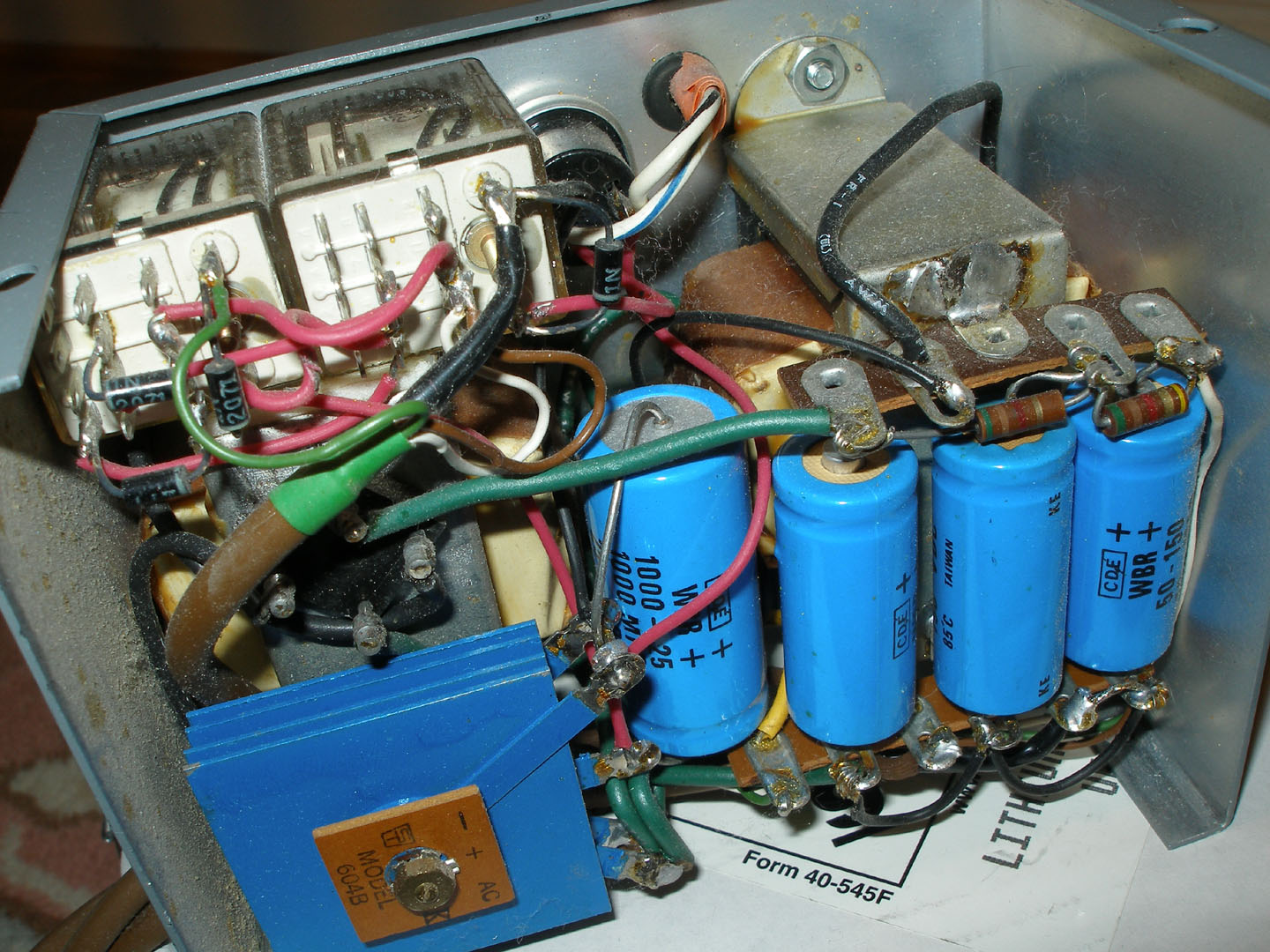
The motor, while it does its job well, it not the original but rather a replacement that seems to have been installed many years, even decades ago.
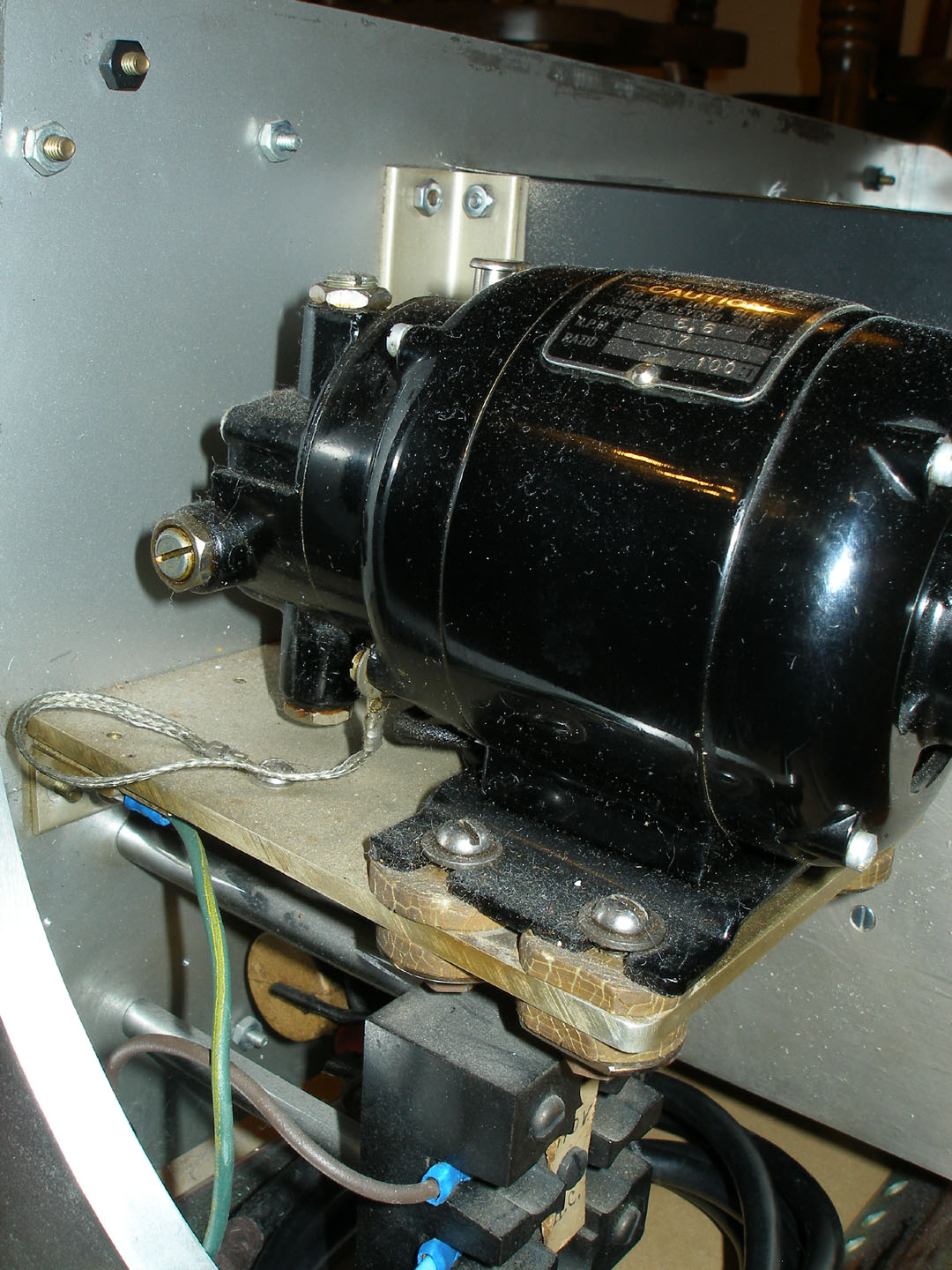
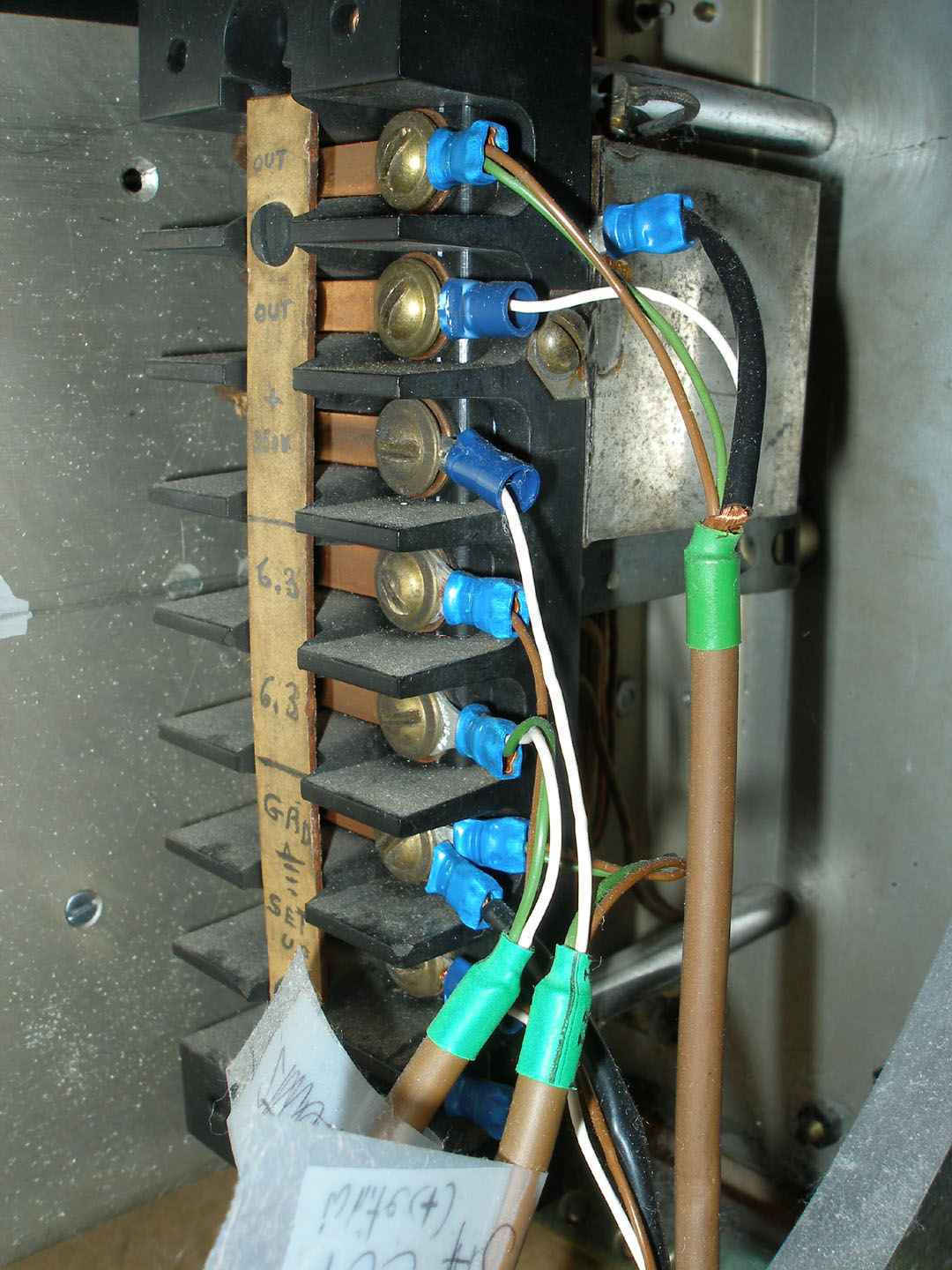
Click on any image to see a highly–detailed enlarged version. The detail that went into building these things is amazing.